It’s 11 p.m. on South Padre Island Drive. The car is ready to leave the shoulder, and the operator still needs a street address. Home, a closed shop, and a storage yard are not the same drop, and a Flour Bluff driveway is not a gated Padre Island condo.
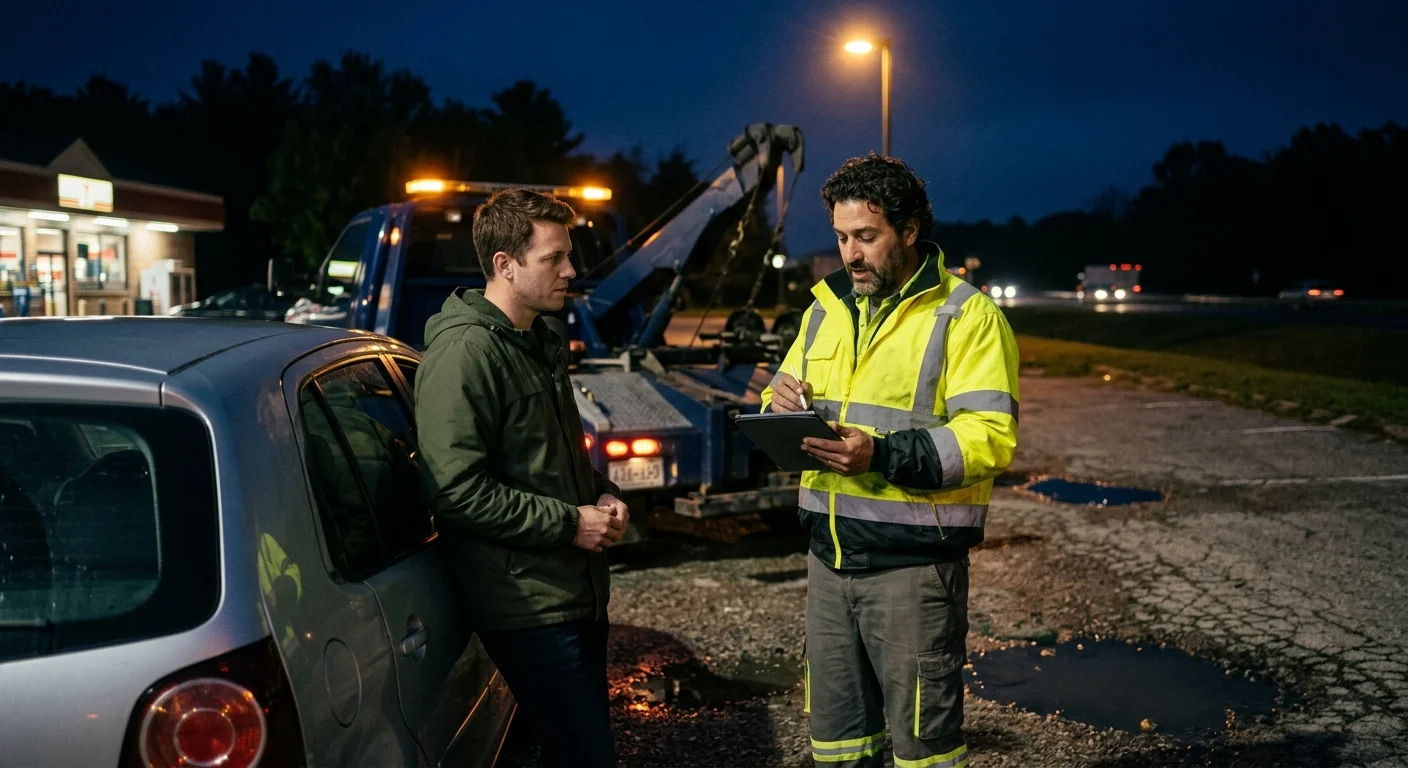
Choose between home, a repair shop, and secure storage
After hours, you are picking a legal place that can actually take the car tonight. The operators we connect you with can move it. They cannot invent a receiving lot.
Home is the simple drop when you can park there legally and get in the door. A house off Ayers, in Calallen, or in Portland across the Harbor Bridge usually works if the driveway is clear and someone can meet the truck. An apartment on Ennis Joslin, Yorktowntown, or downtown Shoreline is different. Guest lots fill up. Gates close. Some managers do not want a wrecker in the aisle after dark. If you cannot park there without blocking a neighbor, home is not the destination.
A repair shop is the drop that saves a second trip in the morning, but only if that shop will receive the vehicle. Independent bays along Saratoga, Ayers, and SPID often lock the fence when they close. A dealership on South Padre Island Drive may refuse an unattended car unless you already arranged it. Do not treat a Google listing as permission. Closed means closed until someone on their side says otherwise.
Secure storage is a vehicle storage facility, not your cousin’s side yard. Texas regulates those yards. You will pay the tow and then daily storage until you claim the car. Use this when home is not legal parking and the shop said no. TDLR’s consumer towing page is the statewide rulebook for what a storage facility can charge and when you can get in to retrieve papers or personal items.
Geography changes the choice. A breakdown on Park Road 22 or near Packery Channel is a long run back to most Corpus shops. Flour Bluff and NAS-area streets add distance and tight residential turns. Robstown and Kingsville sit inland on SH 44 and US 77. If the shop you trust is in Corpus Christi proper, that night move is a longer consent tow, not a five-mile hop. Portland and the Northside sit across the Harbor Bridge from island-side bays. Name the actual city, not “nearby.”
If police took the car, you are not choosing the lot. That is an impound, not a destination you pick. Call the Corpus Christi Police Department and ask them where it went. Specific city lot hours, addresses, and fees could not be confirmed from primary city pages we could verify, so do not guess them from a map pin.
Confirm whether the destination can receive the vehicle
You can ask for a tow to a shop after hours. The shop still has to accept the car. That is the whole confirmation.
Call the shop before you send the truck. Ask three things. Do they take after-hours deliveries. Is the gate locked. Does someone have to be there. If they have a night drop, get it in plain words: which lot, which stall, where keys go. If nobody answers, do not assume the lot is open. Leave a message, then pick a backup address you already control, usually home or a storage facility that said yes.
Clearance and access matter as much as the hours. A lowered car, a dually, or a truck with a toolbox may not fit a shop’s night alley. Padre Island condos add gate codes, sand at the curb, and turns a rollback may not make. A Flour Bluff driveway with a boat trailer in it is a wasted run if the operator cannot get past the trailer. Downtown garages and hotel lots have height bars and overnight rules the desk has to confirm, not you guessing from the street.
The same check applies to home. Ask the apartment office or HOA whether a tow truck can enter after dark. Get a guest stall number in writing if they use them. A Portland cul-de-sac is not a problem because it is quiet. It is a problem if the only legal parking is on the street and the city does not want the car left there overnight. Confirm the stall, then give that stall to the operator.
Storage inbound is a separate yes. TDLR rules on owner access are not the same as a yard agreeing to take a consent drop at 1 a.m. A facility that must let you retrieve documents within one hour during its operating hours may still refuse a new inbound car after it closes the gate. Ask. If they say they are not receiving, pick another address.
If the car might not need a tow at all, stop and sort that first. Jump, fuel, and a tire change are breakdown assistance, not a destination problem. Once it has to leave the shoulder, the receiving lot is the decision.
Plan for keys and an unattended drop
The operator has to load the car. That usually means keys, a way to unlock the steering, and a way to get it into neutral if it still rolls. Standing on the I-37 shoulder or on SH 358 at night is a bad time to discover the spare is at home in Calallen.
If you are leaving in a rideshare, decide who meets the truck. A spouse at a house in Annaville can take the keys and the car. A friend in Portland can meet them on the Northside. Nobody at a locked shop on SPID cannot. Do not send the truck to an empty bay and hope.
Unattended drops only work when the receiving place described the process. Some shops name a lockbox. Some name a night slot and tell you to drop keys through a door. Some refuse keys left anywhere. None of that is a statewide rule, and we could not verify any Corpus shop’s night-drop policy from a primary source, so treat every shop’s answer as that shop’s answer. Repeat it to the operator. “Leave it in the side lot” is not an address.
Do not default to hiding keys in a wheel well. That is not a plan. If you must leave the car, get the shop or the yard to say where the keys go, then put that in the notes for the operator you’re matched with. Bring photo ID with you even if you are not claiming the car tonight. If the destination is a storage facility, Texas expects ID and proof of ownership when you retrieve it later: a license that matches registration, an insurance card, the title, a tax collector’s receipt, a lease, or a TDLR form. You do not pay to pull papers or personal items out. You do pay towing and storage before the car leaves.
Write the unit number, gate code, and a working callback. A Flour Bluff address without a gate code is a truck sitting in the dark. A Packery-area condo without a stall number is the same delay. The operator is licensed to move the car over public roads. They are not your building’s night staff.
Ask how a second tow could affect the total cost
A cheap night often gets expensive in the morning. If the car goes home now and to the shop at 8 a.m., that is two hookups, two mileage runs, and two quotes.
This site’s published light-duty hookup starts at $125 and covers the first five miles. Mileage after that is published at roughly $3 to $5 per mile. The published after-hours surcharge is $25 to $50 between 10 p.m. and 6 a.m. Flatbed work starts at the same $125 hookup and goes up with vehicle size. Those are our published figures, not a statutory cap and not a promise of what any operator will bill. The operator matched to the call quotes the price before doing the work. A tow you request yourself is a consent tow. It is not capped by the TDLR nonconsent maximums.
Do the arithmetic before you pick home as a courtesy stop. A five-mile drop to a house in Molina, then a morning run to a shop on Saratoga, is two published hookups plus miles plus the night surcharge on the first trip. One confirmed drop at the shop, if they will take the car, is one hookup. That is usually the cheaper consent path when the shop said yes.
Distance stacks fast on the Coastal Bend. Padre Island to a midtown shop is not the same as a dead car on Leopard Street. Kingsville, Bishop, or a US 77 shoulder to a Corpus bay is long-distance towing, billed on miles, not on hope. Portland across the Harbor Bridge adds bridge time and a different city on the ticket. Ask for the quote with the real destination in the sentence, not “somewhere in town.”
Insurance and club memberships sometimes pay a tow to a shop, often with a mileage limit. We cannot state your policy’s cap. Call the number on your card and ask whether the night destination counts, and whether a second move in the morning is on you. There is no verified “free” consent tow for a car you asked to have moved. If someone offers a free hook, read what they actually cover.
Texas towing law sits in Occupations Code Chapter 2308 and in TDLR’s consumer rules. Operators who tow on public roads need the right TDLR license. You can check a name at TDLR’s license search. Those rules matter most if the car is in a storage facility or was towed without your consent. They do not set the price of the consent trip you are requesting tonight.
Confirm the destination before dispatch
Say the address before the truck rolls. “A shop on SPID” is not a destination. “The bay on Saratoga, gate on the west side, stall three, keys in the box they named” is a destination. “Home in Portland” is not. Street, city, unit, and who is standing there are.
Emergency towing at night is still a consent job when you called it in. The operator needs the drop to price miles and to avoid a second hook. If you change the destination after the car is on the truck, expect more miles on the quote. Ask what that does to the total before they leave the first pin.
If the only question you still have is whether a truck can come after dark, that is a different page. 24-hour towing in Corpus Christi covers getting help at night. This page is where the car goes once it is hooked. Keep them straight on the call. First the destination that can receive it. Then the hook.
Repeat the plan in one breath: destination, gate, keys, who is waiting, and the quoted price. If any piece is missing, you do not have a drop. Pick home, a shop that answered, or a storage facility that is receiving. Then stay on that address unless you agree to a new quote.
When to call us
When the car has to leave a Coastal Bend shoulder at night and you still need a legal drop, you need a licensed towing operator, not a guess at a locked lot. Name home, a shop that confirmed it can receive the car, or a storage facility that is taking inbound vehicles, then hold that address through the quote. Call us at (361) 967-8088 and we’ll connect you with a licensed operator.