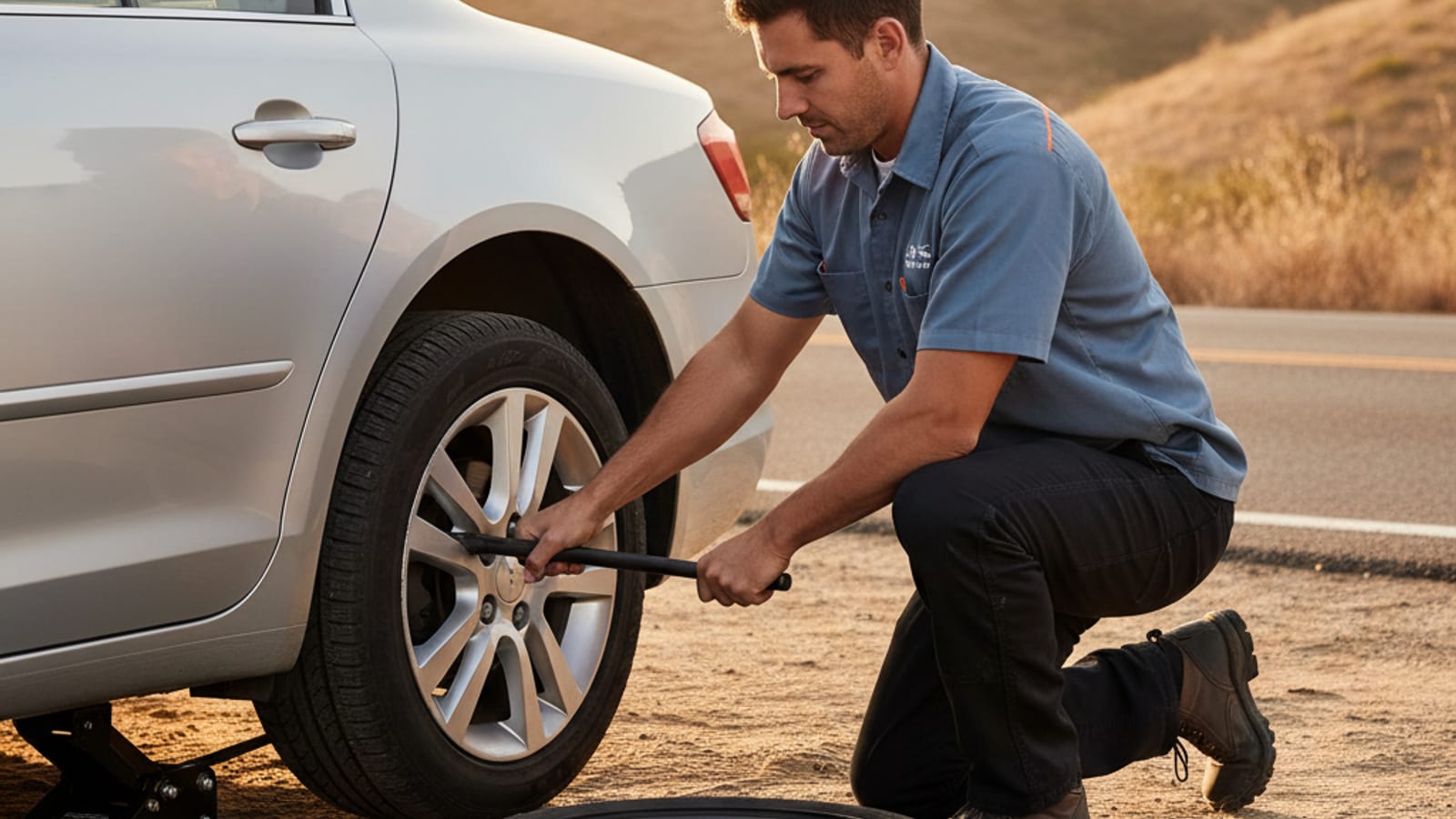
Change a flat tire on the side of the road
Only attempt a tire change where you can work safely, with a suitable spare, tools and the vehicle’s instructions. A narrow highway shoulder is a reason to request assistance.
What you'll learn
- How to decide whether the location is suitable
- Where to find jack points and wheel-nut specifications
- How to check the spare’s limits
Step by step
- Stop in a safe, firm, level location clear of traffic. Use the vehicle manual’s parking and wheel-securing instructions.
- Locate the serviceable spare, correct jack, wheel wrench and any locking-wheel-nut key.
- Loosen the wheel nuts before raising the vehicle. Place the jack only at the manufacturer’s specified point.
- Follow the manual to remove the wheel and fit the spare. Never get underneath a vehicle supported only by a jack.
- Tighten the wheel nuts in the specified sequence and to the manufacturer’s torque. Arrange a professional torque check if needed.
- Follow the pressure, speed and distance limits for your particular spare. Have the damaged tire inspected promptly.
Do not attempt a change when it exposes you or passengers to traffic. Tell the operator which tire is flat, whether you have a usable spare and where the vehicle is stopped.
Michelin’s tire-change guide explains the general sequence. Your vehicle manual and spare-tire markings supply the specifications for your setup.
Rather have a pro handle it?
Towing and roadside across Corpus Christi and the Coastal Bend. The line takes calls 24/7.
Keep learning.
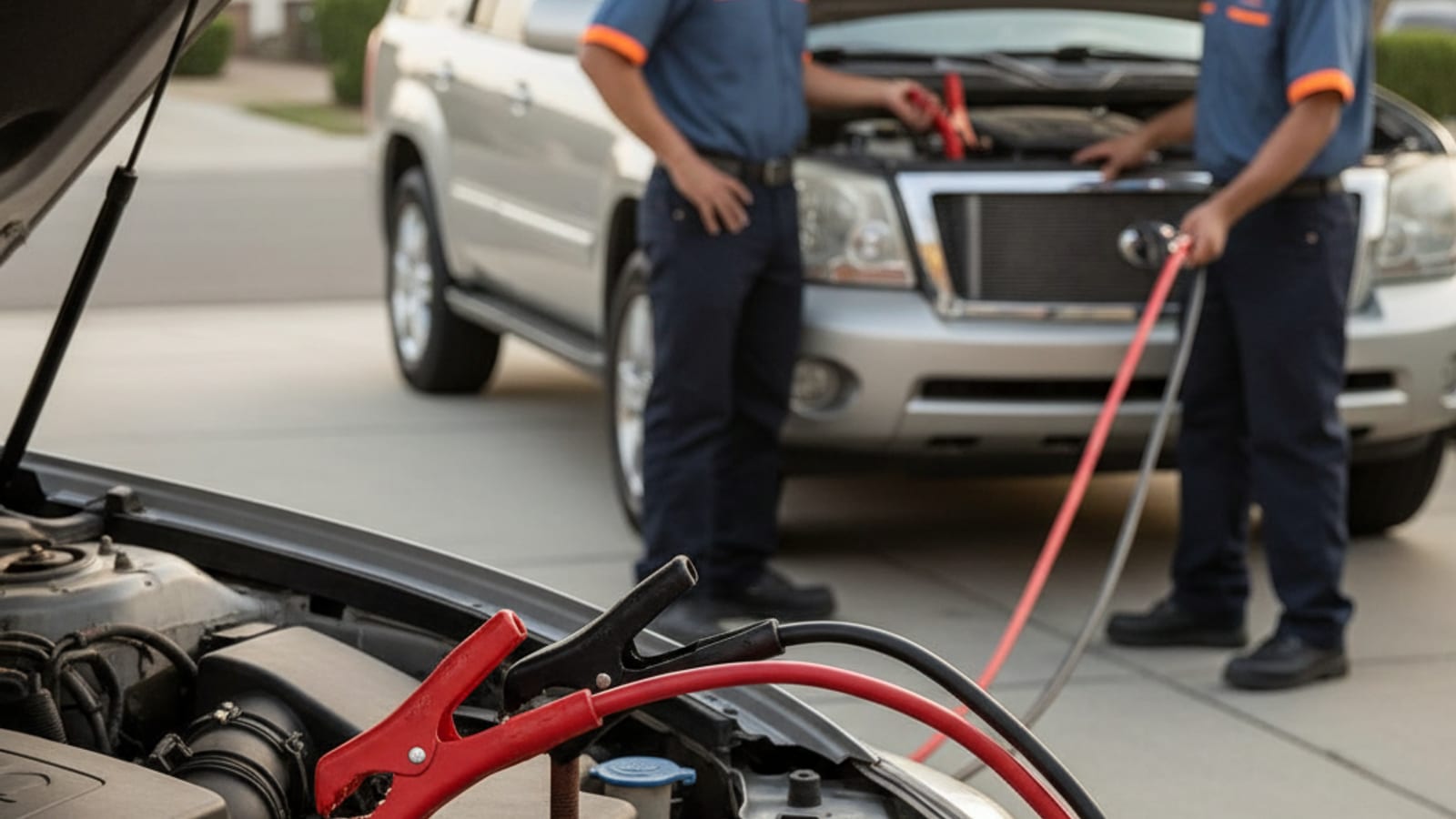
Jump-start a dead battery safely
Check the jump-start instructions for your exact vehicle and power source before connecting anything. Battery location, connection points and starting procedure can differ.
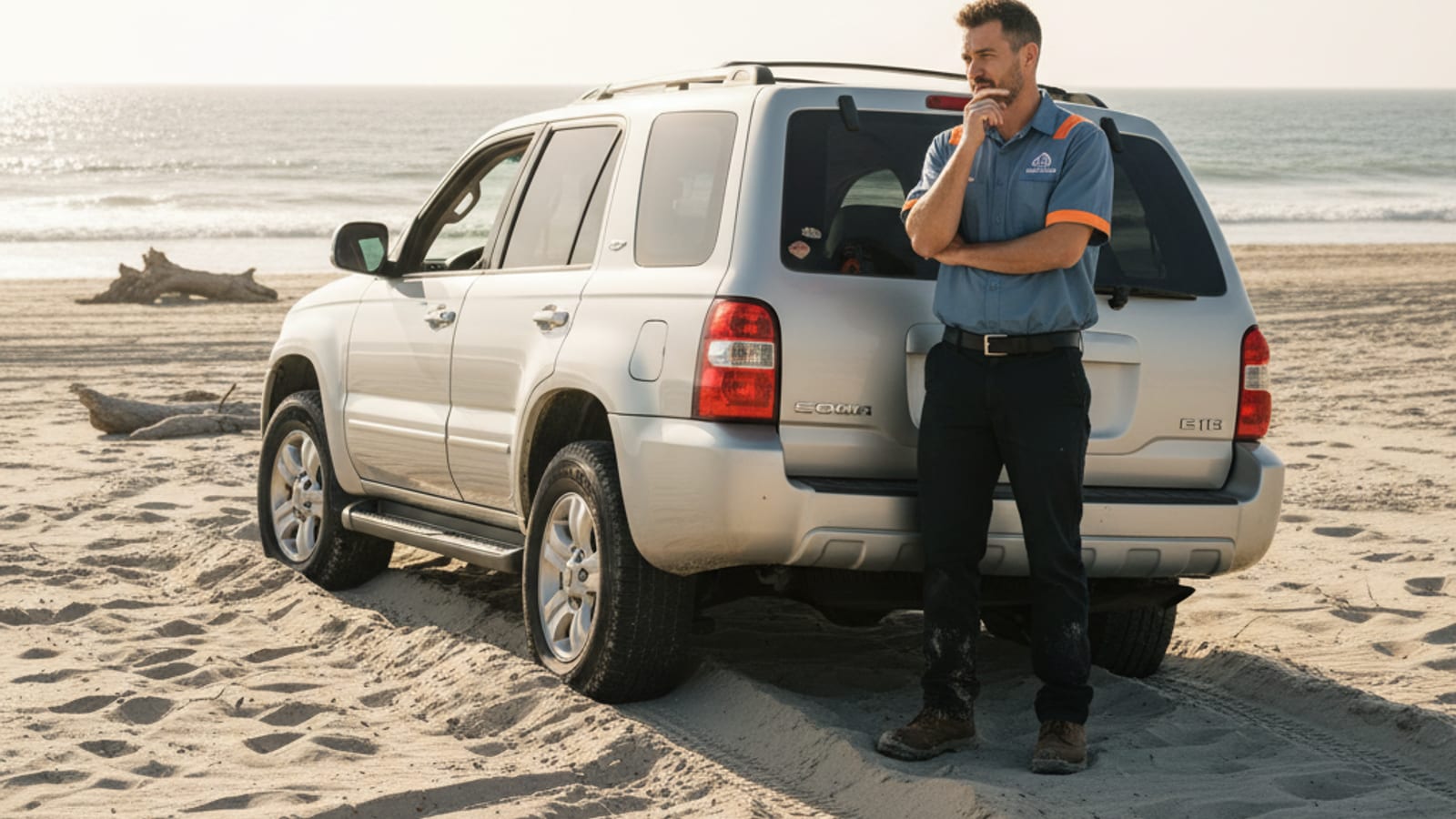
What to do when stuck in sand or mud
Stop trying to force the vehicle forward if the wheels are digging in. Before attempting a recovery, assess the tide, terrain, vehicle stability and everyone’s safety.
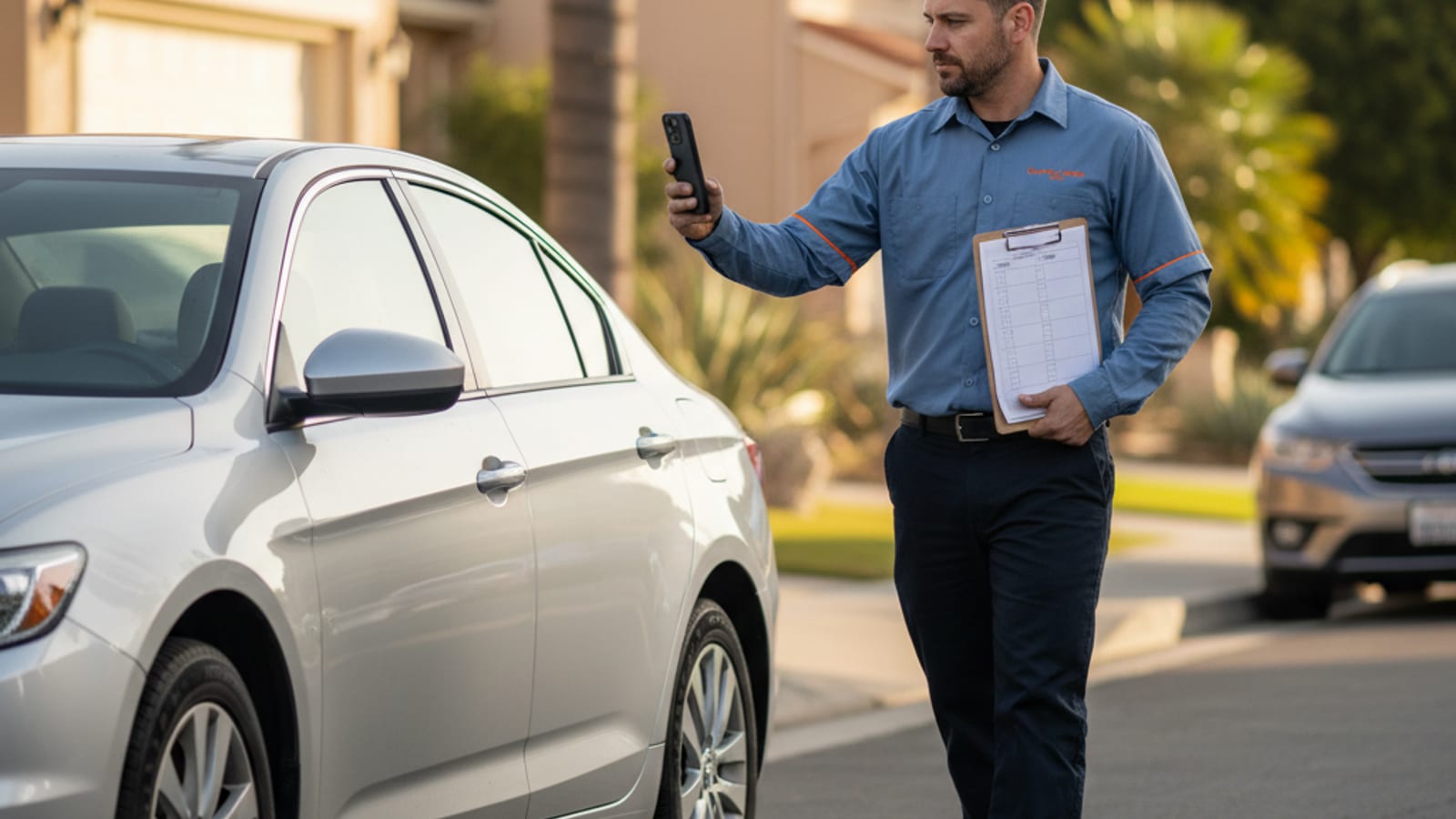
Prepare your vehicle for a tow
Prepare the details an operator needs and document the vehicle’s condition when it is safe to do so. Confirm the loading method and destination before the tow.