Flatbed vs wheel-lift towing: which is safer?
Confirm drivetrain, damage, clearance, and the owner's manual with the independent operator before they hook the vehicle.
What you'll learn
- How a flatbed differs from a wheel-lift
- Which drivetrain and damage questions to ask before loading
- Why the owner's manual, not a generic EV rule, decides the method
- What Quick Tow's published advertising rate covers versus the operator's quote
Step by step
- Give the operator the year, make, model and drive type, and say whether the vehicle is hybrid or electric.
- Open the towing or transport section of the owner's manual for that model and year.
- Ask which wheels would stay on the road on a wheel-lift, and whether that matches the manual.
- Describe damaged wheels, a locked axle, low bodywork or a long haul. Those details often change the method.
- Confirm the loading method and the complete quoted price before authorizing work.
- Quick Tow is a referral line at (361) 967-8088. You hire and pay the independent operator directly.
Manufacturer towing instructions vary by model and year. Do not treat a flatbed-only rule as Quick Tow policy for every EV. Check the manual and refuse a method the manufacturer does not allow.
The short answer
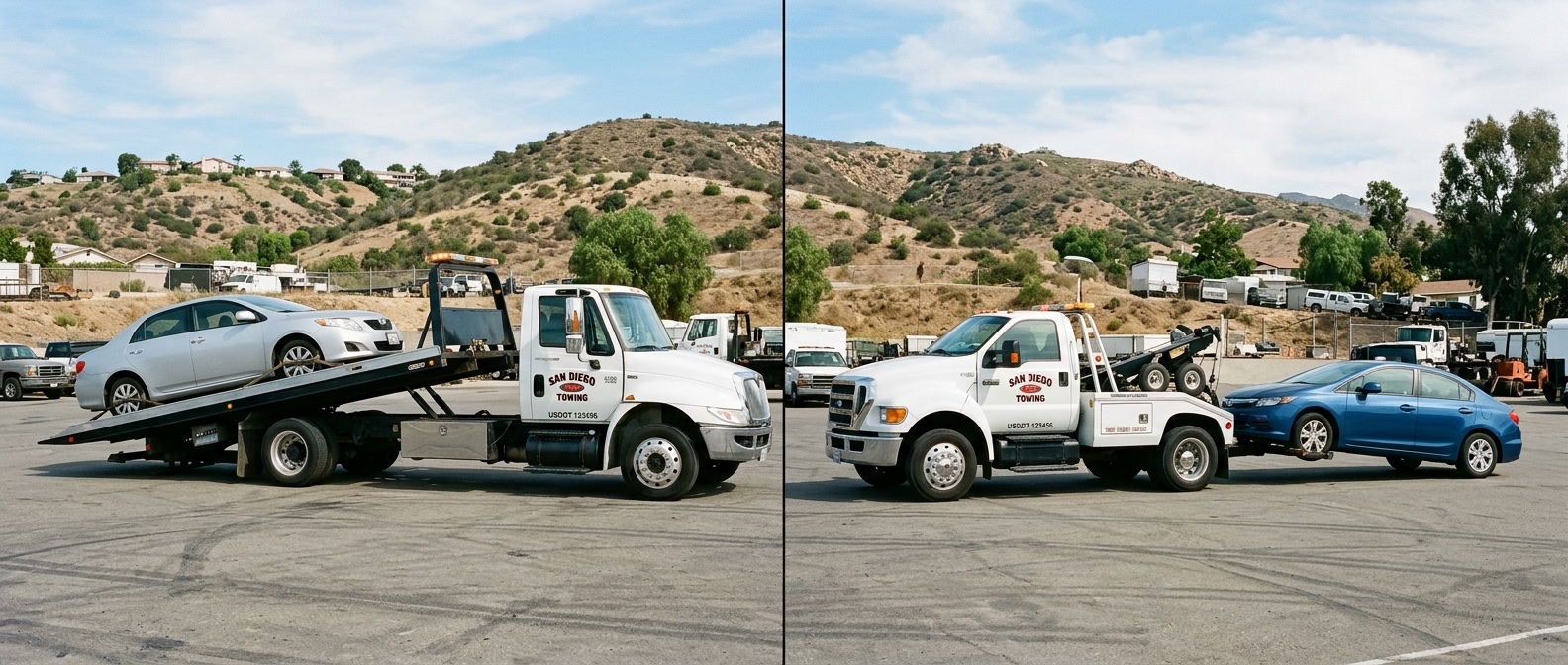
A flatbed carries the vehicle with all wheels off the road. A wheel-lift lifts two wheels and lets the other two roll. For many two-wheel-drive cars on a short, undamaged haul, operators often use a wheel-lift with the drive wheels up. All-wheel-drive, four-wheel-drive, electric and hybrid systems, damaged wheels and low bodywork change that picture. The owner's manual for your year and model is the instruction to follow, not a one-rule-for-every-EV claim.
Quick Tow does not own a fleet. The independent operator who accepts the job chooses equipment they can use safely. Quick Tow's published advertising rate for a light-duty hookup is from $125 for the first five miles, with flatbed starting at that same $125 and then pricing up by vehicle size. The operator quotes the actual price before work.
How each method works
Flatbed (rollback) tilts a deck to the ground. The vehicle is winched on and secured. All four wheels leave the road, so the drivetrain is not rolling during transport.
Wheel-lift slides a yoke under two wheels and lifts them. The other two stay on the road. If the wheels that remain on the road are drive wheels, the tow can damage the drivetrain. Ask which axle will roll and compare that with the manual.
Decision table (check the manual for your year)
| Vehicle situation | Method to discuss | Why the manual matters |
|---|---|---|
| Front-wheel-drive sedan, undamaged, short haul | Wheel-lift with drive wheels up, or flatbed | Rear wheels rolling is often allowed; confirm for your model |
| Rear-wheel-drive sedan, undamaged, short haul | Wheel-lift with rear (drive) wheels up, or flatbed | Front wheels rolling is often allowed; confirm for your model |
| All-wheel-drive | Usually all wheels off the road (flatbed or an approved dolly setup) | Center differentials and transfer cases can be damaged if a driven axle rolls |
| Four-wheel-drive truck or SUV | Usually flatbed; axle disconnect only if the manufacturer allows it | Do not assume an operator can disconnect both axles on scene |
| Battery-electric or plug-in hybrid | Follow that model's transport instructions | Some manuals require a transport mode or all wheels off the road; others differ by year. This page does not quote Tesla. Check the transport section of your own manual |
| Lowered, modified or low-clearance bodywork | Often flatbed, with approach-angle checks | A wheel-lift yoke can contact the lip or undertray |
| Collector, exotic or high-value finish | Ask for a flatbed and any extra protection the operator actually has | Covered trailers are not something Quick Tow can promise |
| Collision, flat, broken suspension or a locked wheel | Usually flatbed | A wheel-lift needs the unlifted axle to roll safely |
Questions that prevent the common mistakes
- Does the manual allow any wheels on the ground for this drivetrain?
- If a wheel-lift is proposed for an AWD, 4WD, EV or hybrid, what page of the manual supports that?
- If the vehicle is lowered or damaged, can the operator load it without scraping or dragging a broken wheel?
- Is the quoted method the same one that will arrive, not a cheaper truck swapped later?
Repair bills after a wrong method are not a figure this site can source. Ask a shop if you need an estimate. Do not sign a blank release.
Published advertising rates versus the quote on scene
| Item | What this site publishes | What to confirm |
|---|---|---|
| Light-duty local hookup | From $125, first five miles | The independent operator's quote before work |
| Flatbed | Starts at the same $125 hookup, then prices up by vehicle size | Whether the arriving truck is a flatbed |
| Extra mileage | Published as roughly $3 to $5 per mile after the first five | The miles and total on the quote |
| After-hours | Published $25 to $50 between 10 PM and 6 AM | Whether that surcharge applies to this job |
| Roadside (jump, tire, fuel, lockout) | From $75 in published advertising | That this call is roadside, not a tow |
Those figures are Quick Tow advertising, not a statutory cap and not a promise that every operator charges them. A tow you request yourself is not the TDLR nonconsent fee schedule.
Texas method rules
Texas Occupations Code Chapter 2308 and TDLR license towing companies, operators and trucks. Follow the owner's manual for method. Occupations Code Chapter 2308 is not treated here as a method-assignment chart. Safe equipment for the vehicle still matters. If a method damages the vehicle, that is a claim against the operator who performed the work, not against a referral line that does not own the truck.
When a wheel-lift can still be the right call
- Two-wheel-drive vehicle, drive wheels up, short undamaged haul, and the manual allows it
- Access too tight for a flatbed, if the operator can move the vehicle safely and then change method if needed
- Low overhead where a flatbed cannot enter. Ask the operator about actual clearance instead of assuming a number
When you call (361) 967-8088, give year, make, model, drive type, hybrid or electric status, what failed, and the destination. A competent operator will state the method they can send. If that method conflicts with the manual, wait for equipment that matches or call another operator.
Rather have a pro handle it?
Towing and roadside across Corpus Christi and the Coastal Bend. The line takes calls 24/7.
Keep learning.
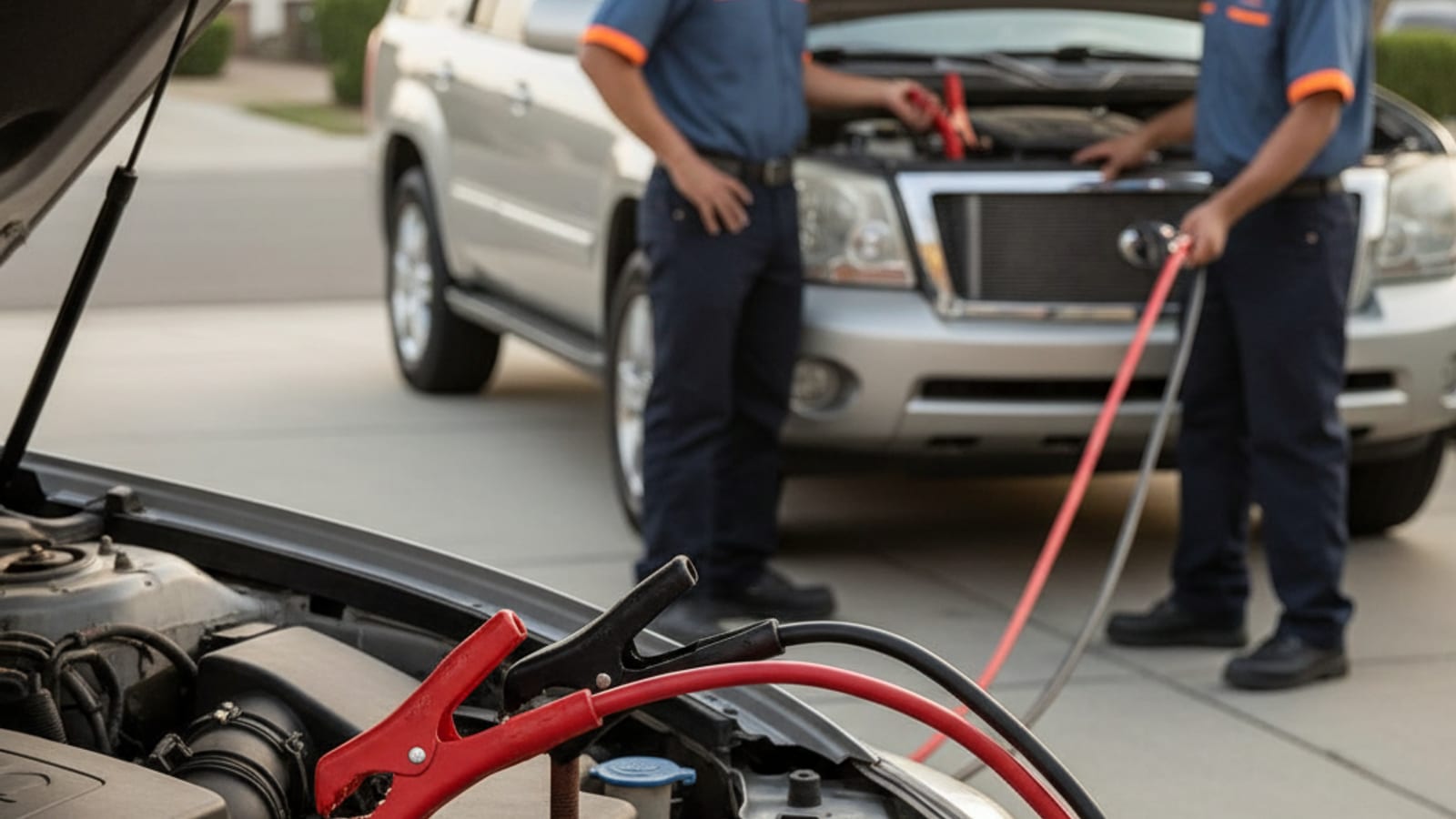
Jump-start a dead battery safely
Check the jump-start instructions for your exact vehicle and power source before connecting anything. Battery location, connection points and starting procedure can differ.
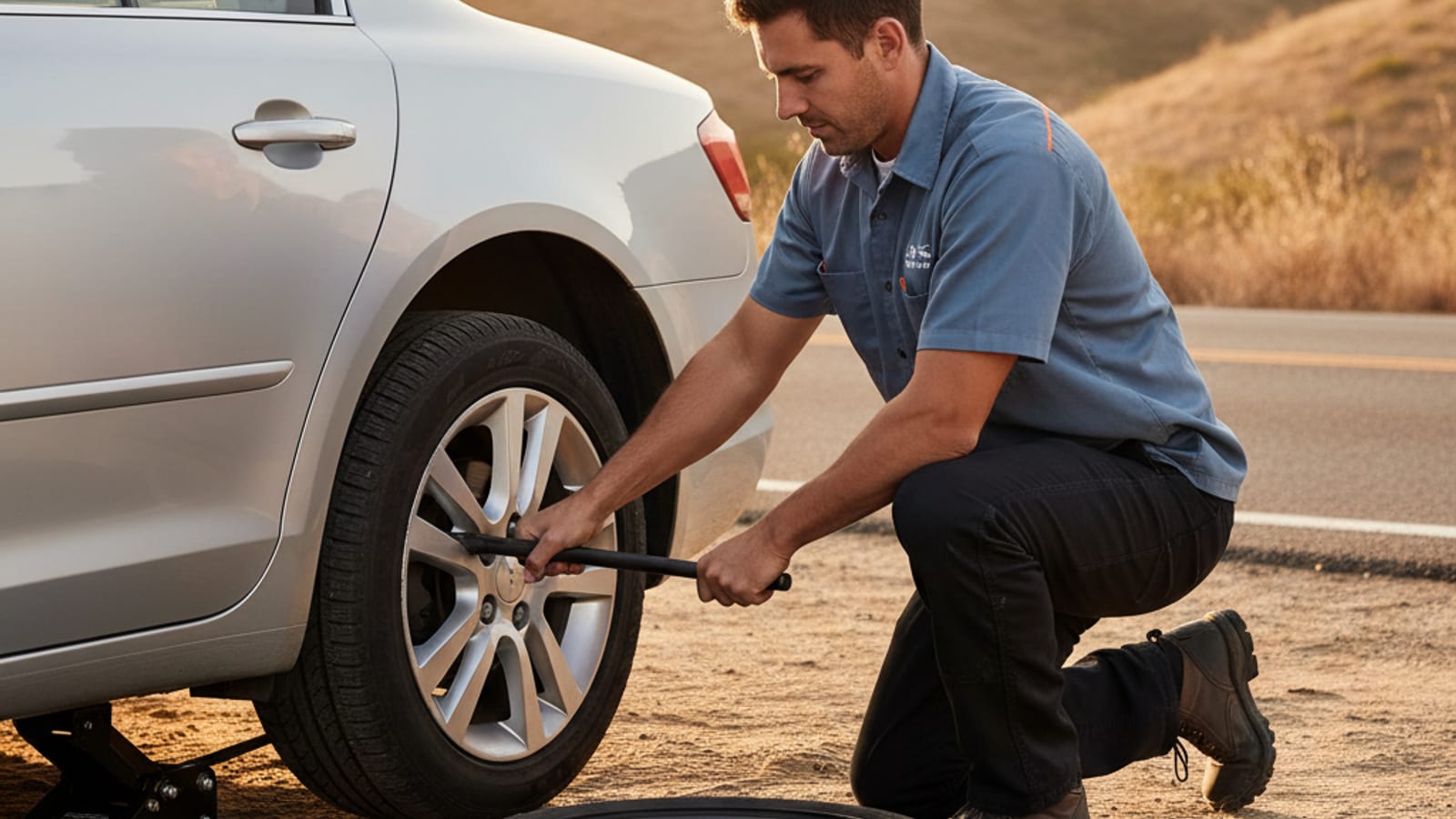
Change a flat tire on the side of the road
Only attempt a tire change where you can work safely, with a suitable spare, tools and the vehicle’s instructions. A narrow highway shoulder is a reason to request assistance.
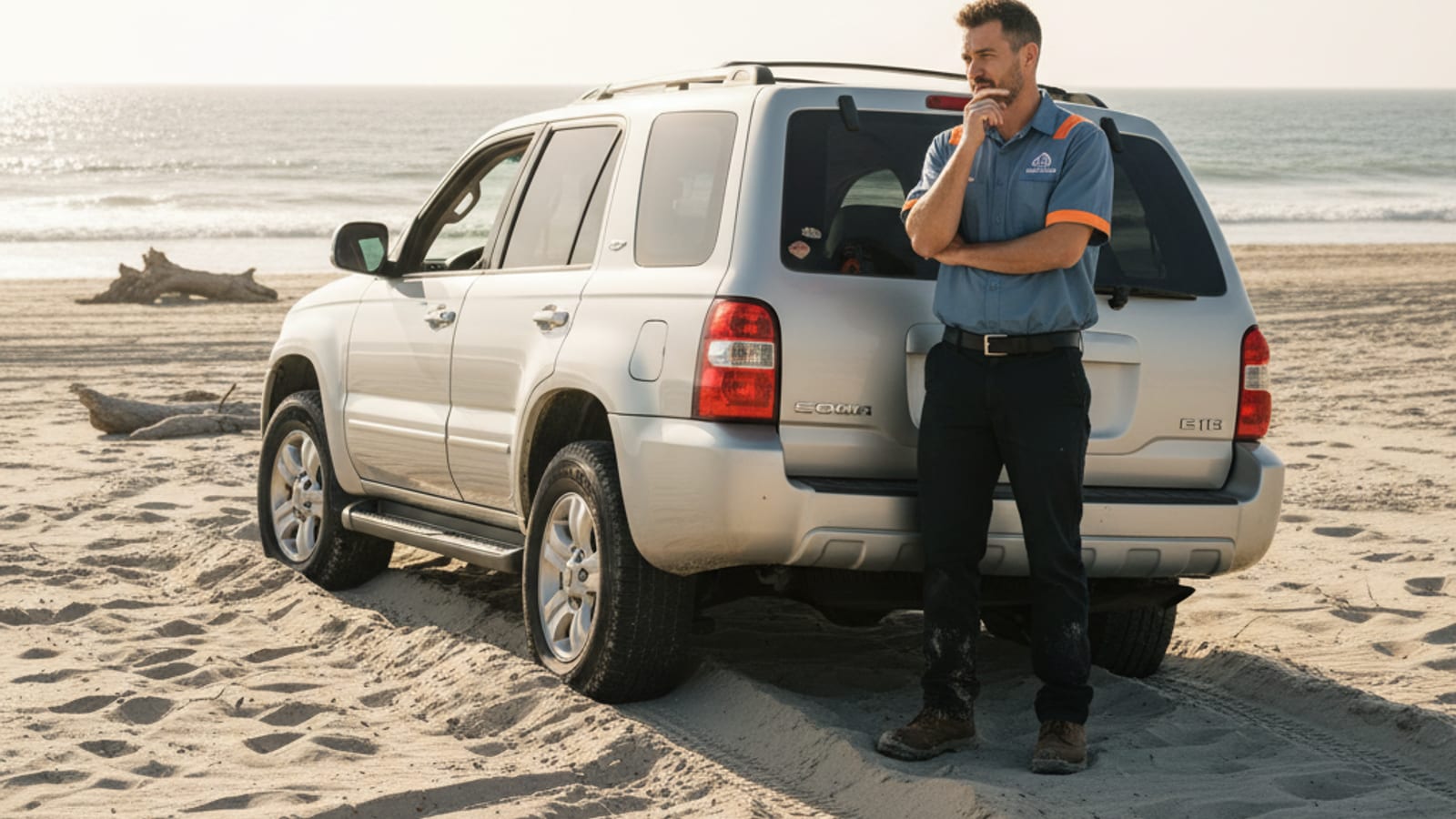
What to do when stuck in sand or mud
Stop trying to force the vehicle forward if the wheels are digging in. Before attempting a recovery, assess the tide, terrain, vehicle stability and everyone’s safety.